Posts
October 27, 2023 at 10:59AM
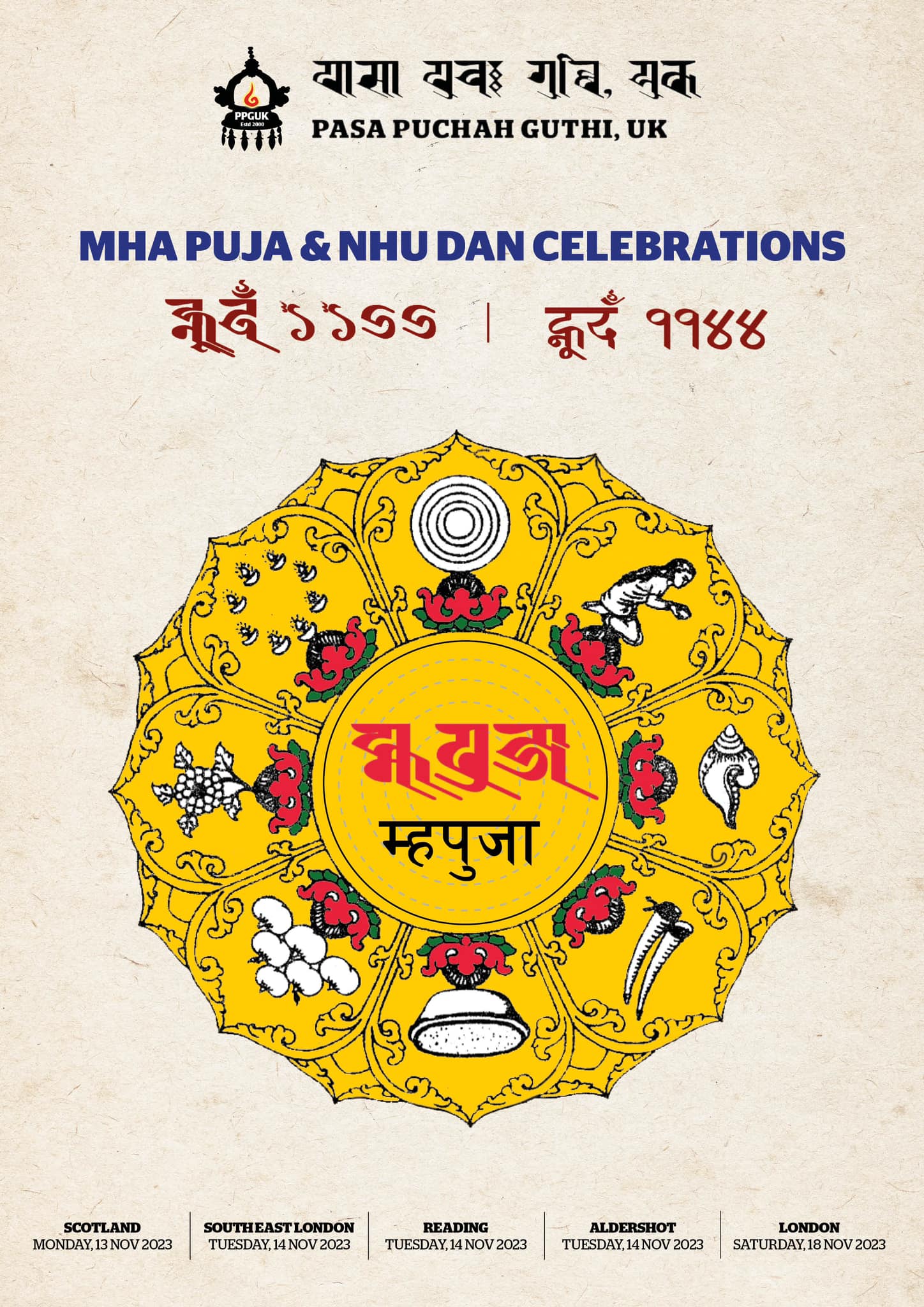
Day 3673: Mha Puja
The annual Mha Puja and Nhu Dan celebration by PASA PUCHAH GUTHI, UK - (London) will be held on Saturday, 18 November 2023 at Greenford town Hall.
Book your ticket now at:
https://pasapuchahguthi.org/event/nhu-dan-celebrations
All other 4 Branches of Pasa Puchah Guthi, UK will be hosting their own Mha Puja at their respective local venues. For more information please visit https://pasapuchahguthi.org
What is Mha: Puja though?
Mha-Puja marks the first day of the Lunar year, and third day or Swonti(Tihar). The term "Mha" means body in Nepal Bhasha. Essentially Mha Puja is the worshiping of each member of the household by the naki(n), the senior active woman of the household in front of mandala. The mandala is drawn with 5 concentric circles at the middle with the shape of an eight-petalled lotus at the outside. The five circles are made up of Chickan(Oil), aakhen(Red rice), Maaye( Black whole lentils), Haaku Musyaa( Black Soyabean) and Taaye(unhusked/puffed rice). The items used to adorn the mandala symbolize good fortune, long life and freedom from perils. The mandala has been interpreted as a microcosmic and macrocosmic representation of the self.
#mhapuja #NhuDan #pasapuchahguthi
October 10, 2023 at 11:12AM
Day 3656: Haku Patasi: Black and Red
Haku Patasi is the black Saree with red boarder which Newah women and girls wear. Black and red colours in Haku Patasi is not just aesthetically pleasing but it also signifies various aspect of Newah Culture. Hence, this year to celebrate the importance of women in our community PASA PUCHAH GUTHI, UK - (London) organises a ‘Mohani Celebration’ in the theme of Black and Red.
If you would like to know more about what Black and Red of Haku patasi signifies, in Newah culture, please read on. Otherwise, join us to celebrate the Black and red on Sunday, 15 October 2023 at Harrow Football Club.
Book your tickets now: https://pasapuchahguthi.org/event/mohani-celebration-2023...
Haku Patasi (Haku Parsi)
The choice of black and red as predominant colors in Haku Patasi, the traditional attire of Newar women in Kathmandu Valley, carries cultural, symbolic, and aesthetic significance:
1. Symbolism:
• Red: Red is a highly symbolic color in many cultures, including Nepali and Newar cultures. It is associated with various positive attributes such as energy, passion, strength, and prosperity. In Hinduism, it is often associated with auspiciousness and is used in religious ceremonies and rituals.
• Black: Black, on the other hand, represents power, mystery, and protection against negative influences. In some cultures, black is associated with transformation and rebirth. It can also symbolize the primordial source of creation in Hinduism.
2. Marital Status: The choice of colors in Haku Patasi can also signify the wearer's marital status. In many cases, red is associated with married women, symbolizing their marital status and the vitality of married life. Black, in contrast, is often worn by unmarried women, symbolizing their readiness for marriage.
3. Balance and Harmony: The combination of black and red can represent the balance between opposing forces or energies. In Hindu philosophy, this balance is often depicted through the complementary concepts of Shiva (often associated with black or dark colors) and Shakti (associated with red). This symbolism underscores the idea of harmony and completeness.
4. Aesthetic Appeal: The contrast between black and red creates a visually striking and aesthetically pleasing combination. The rich, vibrant red against the darker backdrop of black embroidery and designs adds to the allure of Haku Patasi, making it a visually stunning traditional attire.
5. Historical and Cultural Significance: The use of these colors has deep historical roots in the Kathmandu Valley. It reflects the cultural heritage of the Newar community and their connection to Hinduism and Buddhism, which are prevalent religions in the region.
6. Festive Occasions: Red is often associated with festivities and celebrations in many cultures. When Newar women wear Haku Patasi with red as a dominant color, it signifies their participation in special occasions, such as weddings, religious festivals, and other joyous events.
7. Protection and Blessings: Both black and red are believed to have protective qualities. Wearing these colors is thought to offer protection against negative energies and bring blessings and good fortune to the wearer, especially during significant life events like weddings.
It's important to note that while black and red are commonly used in Haku Patasi, the specific designs and patterns can vary widely between different Newar communities and families, each with its own unique traditions and symbolism. Therefore, the interpretation and significance of these colors can also vary depending on the specific context and cultural traditions within the Kathmandu Valley.
#Mohanicelebration #dashain #hakupatasi #hakuparsi

October 9, 2023 at 11:18AM
Day 3654: Monkeys in the Monkey Temple
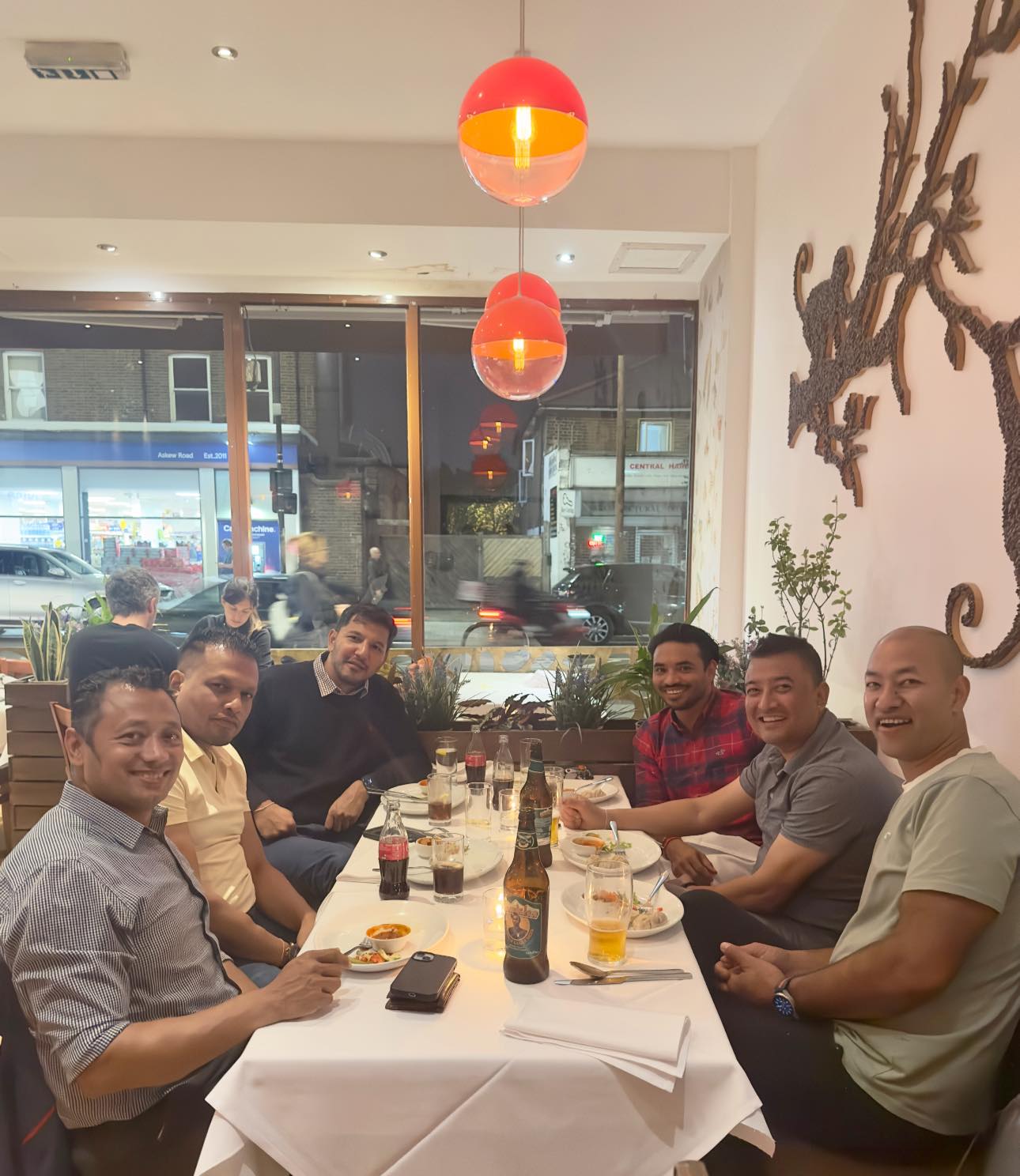
We have been friends for almost quarter of the century…yes 25 bloody years. We have, literally, grown old together, from Boys to Men.
We have learnt from each other, we have hurt each other, we have supported each other, we have hated each other, we have partied together, we have had fun together and we have created history in the UK together but most importantly we have tolerated each other and now, created a family together…West London Family!
#westlondonfamily #prayasband
October 5, 2023 at 11:23AM
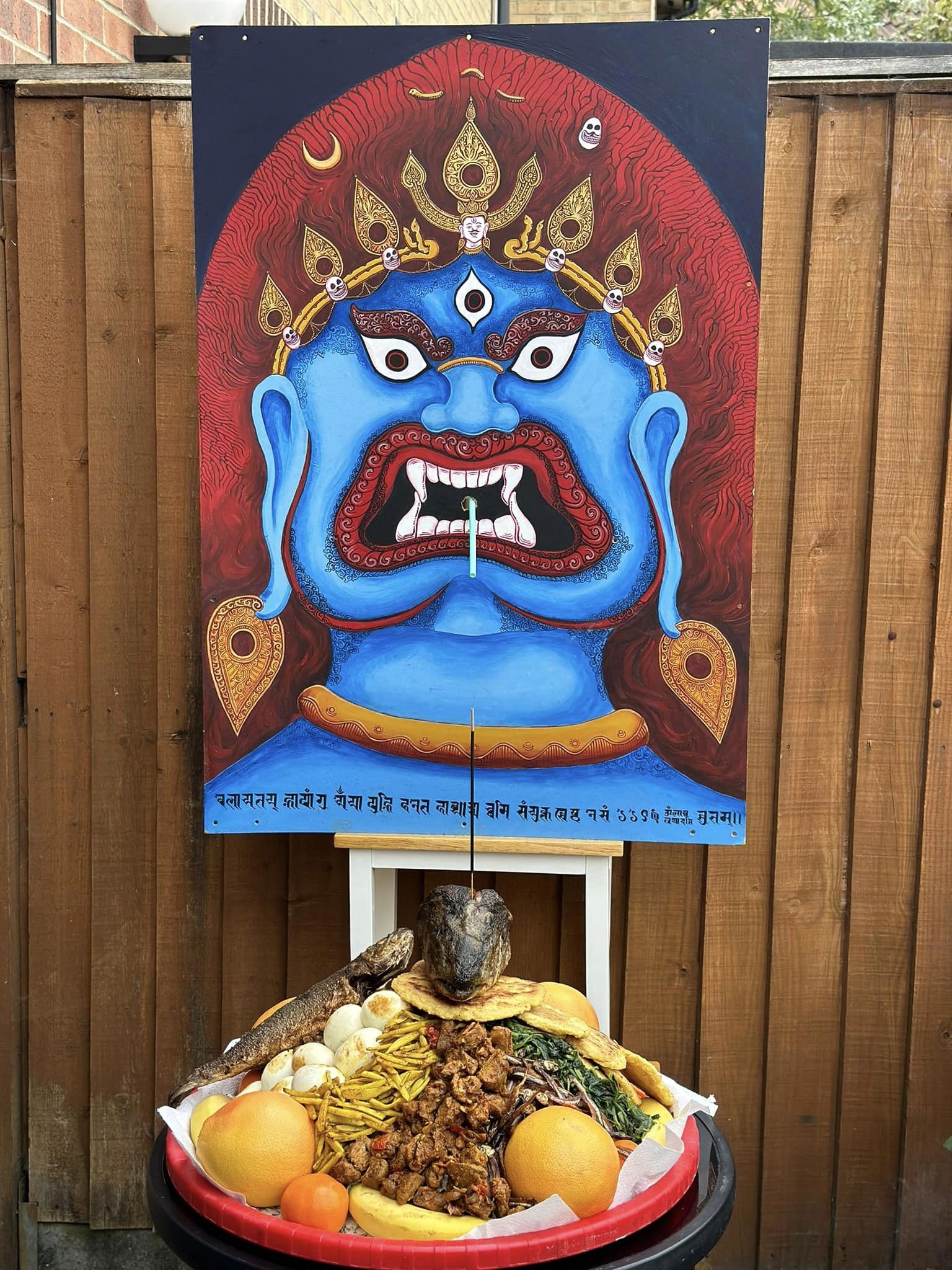
Day 3651: Ãkāśa Bhairav - आकाश भैरव:
आकाश भैरवको आफ्नै कथा छ| आकाश भैरवलाइ पहिलो र पौराणिक किराति राजा यलम्बर भनेर पनि चिनिन्छ| उनको समन्ध महाभारतको एउटा महत्वपूर्ण घटनासंग पनि जोडिएकोछ| ऊनि कुरुक्षेत्रको लडाईमा हार्नेहरुको पक्ष, कौरवहरु, संग मैदानमा उत्रेका थिए| उनको यो दुर्भाग्यपूर्ण छनोटका कारण भगवान कृष्णले आक्रोशित भएर उनको टाउको काटेका थिए| त्यो आक्रोश येति भयानक थियो, उनको काटिएको टाउको उडेर काठमांडु आइपुग्यो भन्ने कथन छ| (यलम्बर र महाभारत को सम्बन्ध पनि रोचकनै छ। यलम्बर भारतको हरियाणामा भिमको नाती घटोरकोचको छोरा बार्बारिकको नामले पनि चिनिन्छ। यसको बारेमा अर्को पोस्ट्मा)
ईन्द्रजात्राको समयमा काठमांडूको ईन्द्रचोकमा टाउको काटिएका देउता, आकाश भैरव, र कैदी देउता, ईन्द्र, आमने -सामने राखिन्छ| आकाश भैरवको पौराणिक क्रियाकलाप आत्म-बलिदानबाट प्रेरित भएकोले उनलाई सम्मानित गरिन्छ| नेपालमा आकाश भैरवको पहिचान मुख्यत: नेवा:हरुसंग, आजु (सुरक्षात्मक हजुरबुवा) भनेर जोडिएको छ| यसर्थ भैरवलाई नेपालको रक्षकको रूप मा पनि लिन सकिन्छ| आकाश भैरवलाइ नेपाल भाषामा हाथु-द्यो भनेर पनि सम्बोधन गरिन्छ|
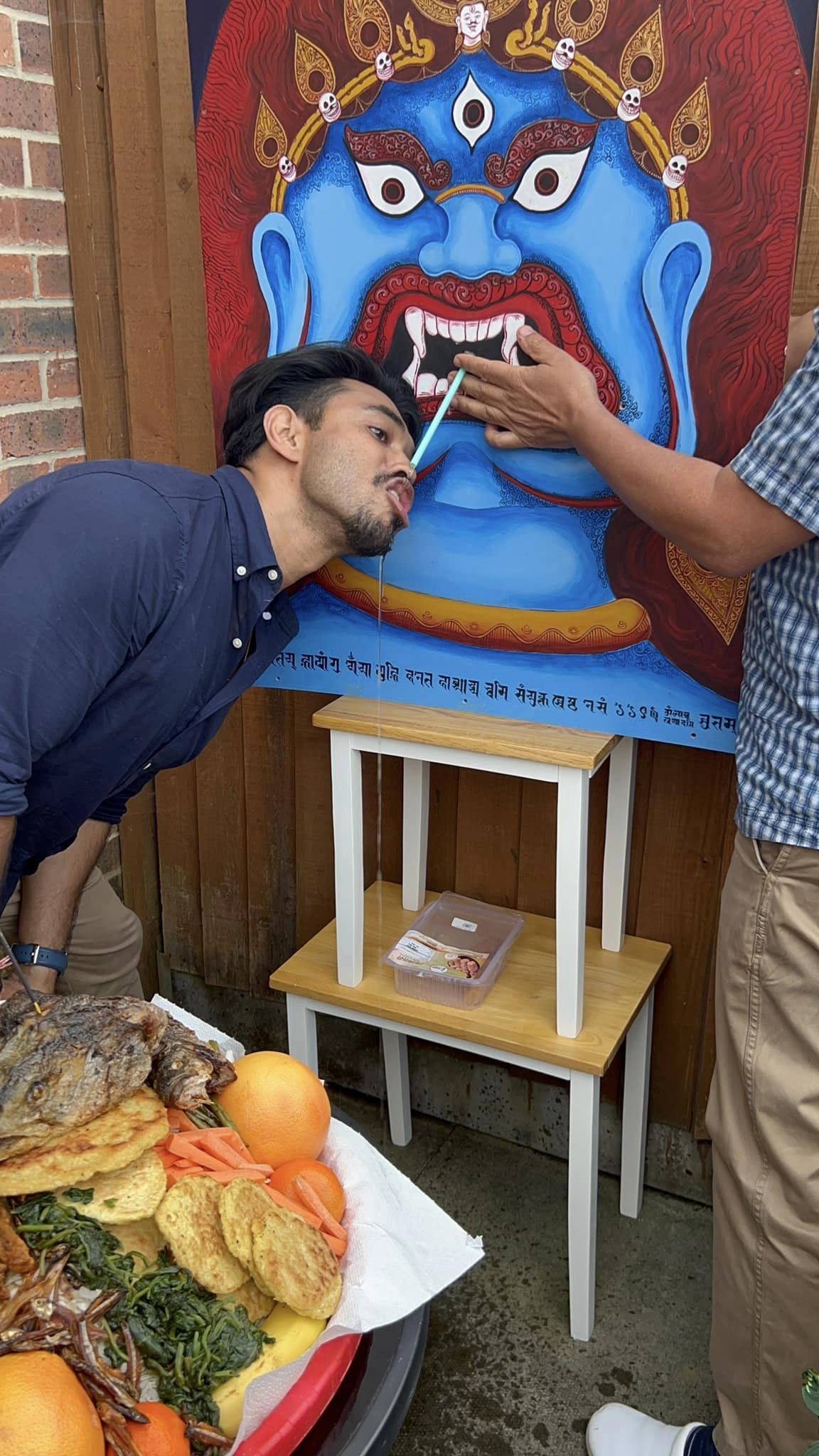
हाथु-द्योका रुपमा उनको मुखमा जडित नलिबाट आफ्ना भक्तहरुलाई उनि प्रशाद स्वोरुप पंचामृत पनि पिलाउँछ्न| आकाश भैरव गुथीका अनुसार पंचामृत बनौना जांडमा घ्यू, दूध, दही र मह मिसाउने चलन छ| यसरी पंचामृत पिलाउने प्रक्रियालाई हाथु-हायकेगु भनिन्छ| हाथु-हायकेगु भन्दा पहिले भेंडा या बाख्राको बलि दिने पनि चलन छ - धीमे बाजा को साथमा|
हाथु-द्यो (आकाश भैरव ) र येंया (ईन्द्रजात्रा) को सम्बन्ध मेरो शोध अझै जारी छ।
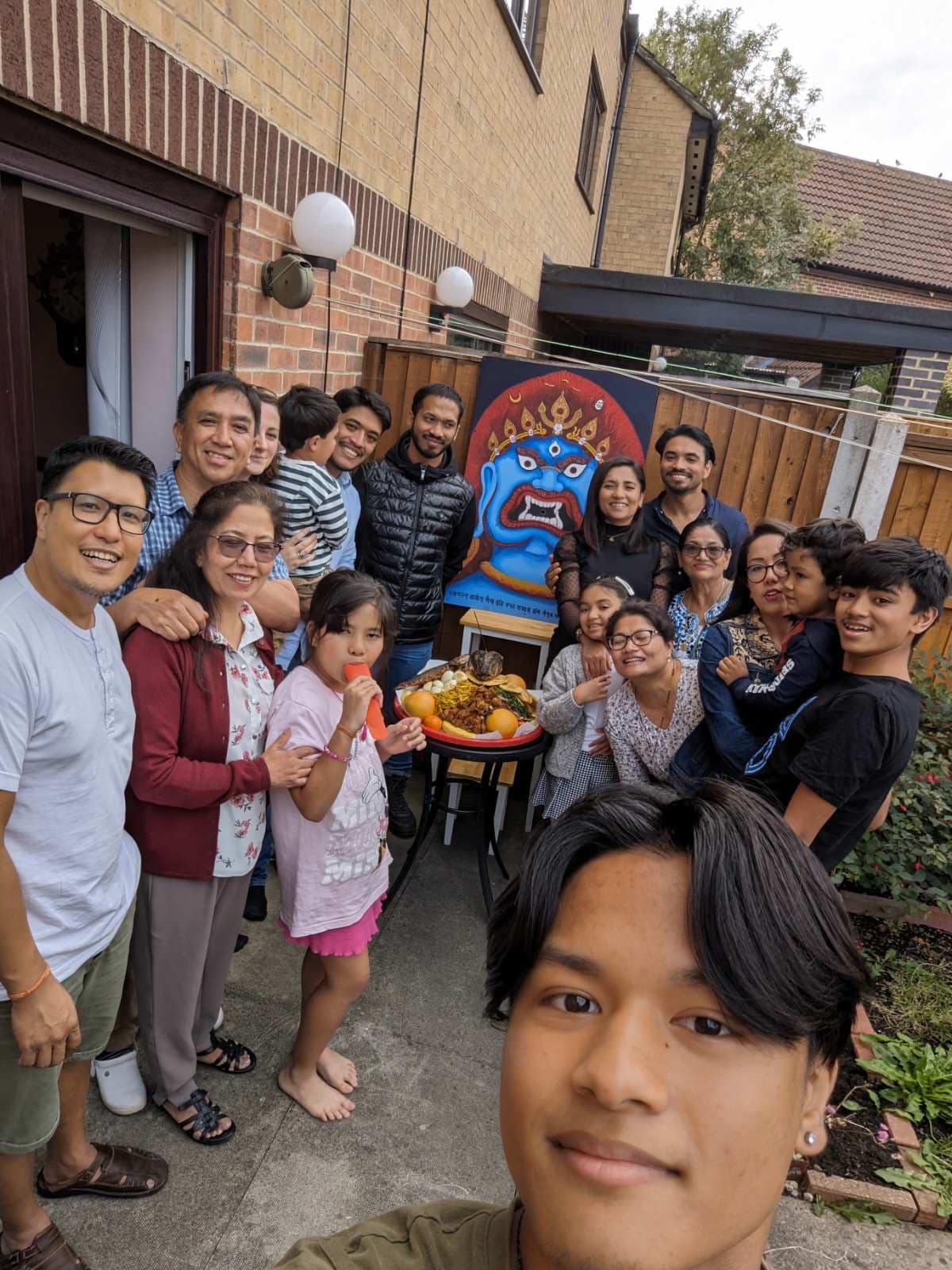
तर, यो हाम्रो लागी येंया मनाउने र परिवार भेत्ने रमाईलो अवसर भएको छ!
Ãkāśa Bhairav:
Ãkāśa Bhairav has his own story, in which he is identified with mythical Kirāti king Yalambar. His story intersects with one of the defining moment of Mahābhārata. He joined the Mahābhārata battle of Kurukșetra on the losing side, that of Kauravas. For that unfortunate choice he was punished by lord Krishna, who cut off his head with such a force that it flew all the way back to Kathmandu. (There is a very interesting story about Yalambar and Mahābhārata. Yalambar is also considered grandson of Bhima and son of Ghatorkocha and known as Barbarika in Hariyana India, more on this some other time.)
During IndraJatra, in Indrachwok the beheaded god faces the captive god(Indra). The beheaded one whose mythical act comes close to a self-sacrifice, is much more revered. Genealogically, Bhairav’s identity is connected to a solely Newar deity, the protective grandfather, Åju.(Belatis, 2016) Hence, Bhairav becomes also the protector of the modern nation of Nepal. And what is more, Ãkāśa Bhairav has something to give his devotees. As a Hathu-dyo, he gets set times a tube in his mouth, from which rice beer spouts for the comfort of the crowd. According to the Guthi members some ghee, milk, yoghurt, and honey are mixed in the beer to turn into paňcāmŗta, the mixture of five holy ingredients. Ãkāśa Bhairav is also referred as Hathu-dyo.
The Hathu Hayekegu (the spouting of rice beer) is at certain times preceded by a sheep or goat sacrifice in front of platform and is accompanied by the Jyapu’s dhime music and the distribution of Samay baji. A mixture of Beaten rice, roast meat, soybeans and ginger. Which is customarily taken (with alcohol) after the sacrifice or the worship of a deity.
My research on relationship between Hathu-dyo (Ãkāśa Bhairav ) and Yenyaa (Indra jatra) is still going on.
However, we take this opportunity to meet with family and celebrate, Yenyaa!