

Posts
August 31, 2018 at 3:36PM
London Love
#London #TowerBridge #Engineering #Tourist #LondonTourist #EnglishHeritage #DayOut #English #UK #UnitedKingdom #GreatBritain #British #Bridge #LondonBridge #Sky #LondonBridge #VisitLondon

August 30, 2018 at 11:59AM
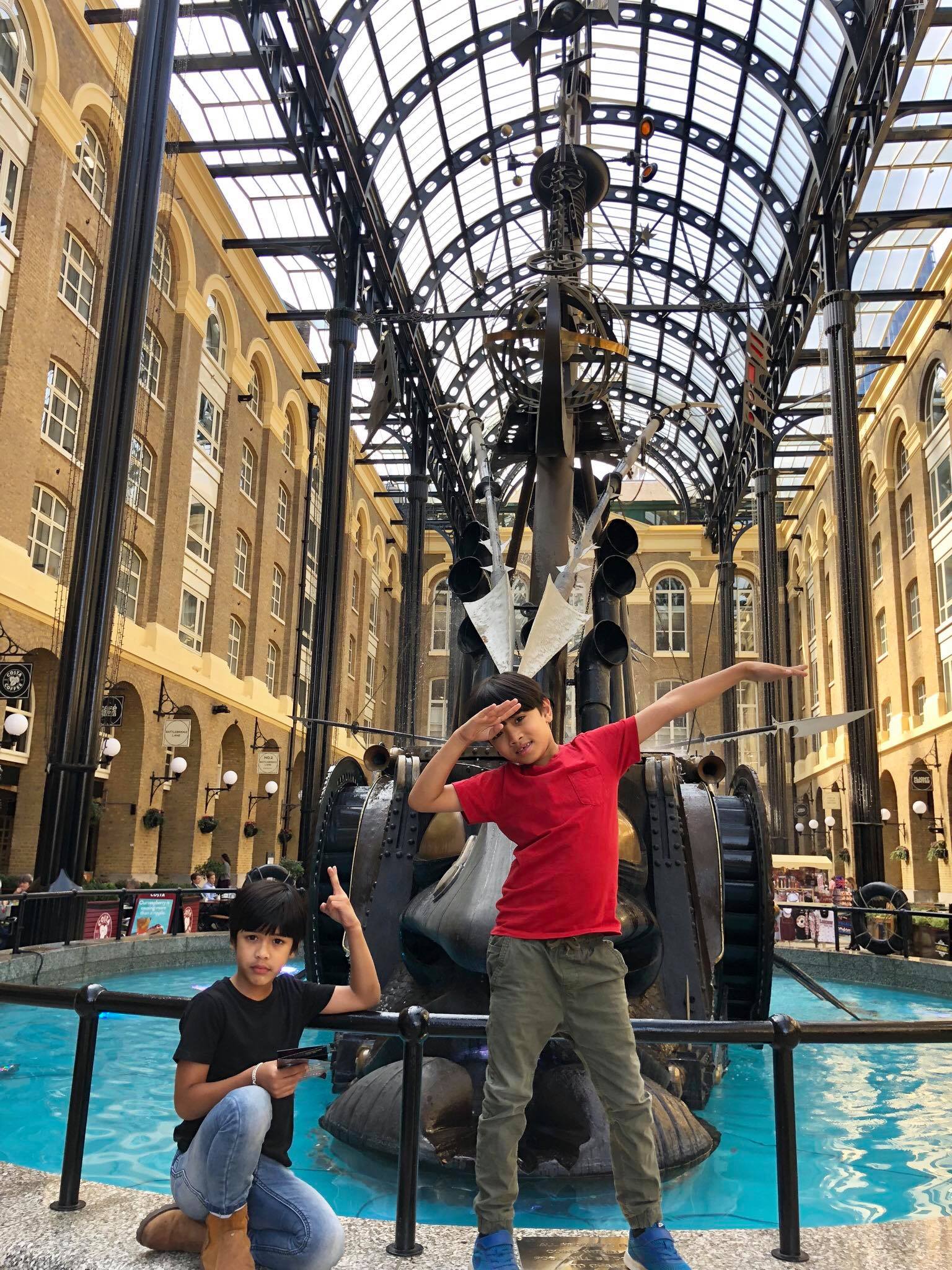
Day 2167: HMS Belfast
A visit to satisfy Oneek’s growing love for museums, guns, engineering, McDonald’s and Sareen.
#SummerHolidays
Oneek & Sareen
Tower Bridge, London 2018


August 26, 2018 at 12:12PM
Day 2163: Dhunyaa Munyaa
Pasa Puchah Guthi, UK creates its first ever ‘Dhunya Munya’ of London; and I get the privilege to rotate it the first.
धुंन्याय, १२ हातको बाँसमा सबै भन्दा माथि पहेंलो कपडाको झन्डा हुन्छ, त्यसलाई हनुमान को प्रतिकमा लिइन्छ त्यसको मुनि आठ रंगको झन्डा आठवटा हुन्छ, त्यसलाई अस्त मात्रिकाको प्रतिकमा लिइन्छ आठ वटाको बिचमा कालो चमार हुन्छ त्यसलाई भैरबको प्रतिकमा लिइन्छ त्यसको आधि मुनि अर्को सेतो चमार हुन्छ त्यसलाई अजिमा को प्रतीकमा लिइन्छ कालो चमरमा घन्टी ( गंचा ) हुन्छ
आठ रंगमा पहिले हलुका पहेंलो ब्र्म्हाय्नी ,दोस्रोमा सेतो रुद्रायनी तेस्रोमा गाढा रातो कौमारी चौथोमा हरियो बैस्नबी पाचौमा गाढा रातो बाराही, गाढा पहेलो इन्द्रायणी गाढा रातो चामुण्डा हलुका पहेलो माहालक्ष्मी बिचमा कालो भैरब, यसरी बिजयको प्रतिकको मा लिने ध्वजा को रुपमा पनि लिने धुन्याय, नेवाः संस्कृति मा जात्रा उत्सब र सुभ कार्यमा प्रदर्शन गर्ने गरिन्छ|
August 23, 2018 at 12:13PM
Day 2159: Urban dictionary
After annoying me with his silly comments for quite a long time, Oneek says,’Daddy, I was only ‘Trolling’ you.’
Now where the heck did he learn this word from? I hadn’t realised ‘troll’ was even a word until I was actually ‘trolled’ on Facebook.
Am I growing old or is this little man growing too fast?
Whatever, all was forgotten when these 3 kings reached 4 Kingdom.
Oneek and Sareen
4 Kingdom, Thatcham UK - 2018

August 10, 2018 at 12:13PM
Day 2148: Monkey on a Donkey
Oneek’s first ever walk on London Bridge - ‘Tower Bridge, daddy, not London Bridge’ he corrects me.
OK, Oneek’s first ever walk on Tower Bridge and he decides to get on my head.
Tower Bridge, London, UK. 2018
#DaddyChhora

August 9, 2018 at 12:14PM
Day 2147: Gathāṃmugah: The Expulsion of the Demons
Gathāṃmugah also called as Ghaņṭākarņa, in common story in Kathmandu, was led into a well or Pit hole by a frog. People caught him and killed him (Anderson 1971:73). But before that he was insulted all day long at a crossroads before being killed, dragged away and then burned to ashes according Asakaji Vajrācārya (1987:50). Other aspect of Ghaņṭākarņa the figure of Gathāṃmugah refers to a cultural rebel who revolted against the caste system and was therefore killed. (Sayami, 1980:5). In that view, he was a local hero who stood up for poor. However, in his later day he became mad and people had to raise funds to cremate him.
Ghaņṭākarņa, ‘Bell-eared’, is said to have been nāstika(atheist) who put bells in his ears in order not to hear the gods.
Another aspect of Gathāṃmugah is the purification of the house from the rice plantation, in conjunction with the casting out of the Bhûtpret from the house. In Kathmandu, a nail is hammered above the door to keep the ghost out. People also wear iron rings to protect them against evil spirit. (Van den Hoek, 2014)
Like most rituals in Kathmandu, Gathāṃmugah is also related with the agrarian culture. If we look closely to the Newah culture even the evil is satisfied with the rituals and feast. Its same here too. These ghosts believed to help farmers in the field during the Sina: Jya: and during these monsoon season, the people had the interaction with the ghost they have this ritual to have bad affect form this impure being. Bhau: biyou is feeding the ghost. And throwing out the stack of Nha:pa is a way of throwing the impure things out of the city boundary.
There is also a ritual of expulsion of various reed images of this figure on Gathāṃmugah Carhe (Skt. Caturdaŝī, fourteenth day). The reed figures are generally addressed as Âju, grandfather in Nepal Bhaŝa, which is also a familiar term addressed for the god Bhairava.
The reed figure is also called as Bhu-Dyo, a ghost-god. From Bhu-dyo it has become bhut – which also brings the completely different meaning of bhut - the agricultural one. Some days before the rice-sowing at aksayatritya, bhut or bhut-pret are lured into the city with special bau, ghost food, and once the rice has been transplanted and is considered strong, bhut are evicted from the city on Gathāṃmugah.
Ghaņṭākarņa is the first celebration of death that starts from Harisaiyanī Ekādaŝi till the Haribodhini Ekādaŝi.
Picture Credit: Kiraj Gainju Blog Store

August 9, 2018 at 11:15AM
Day 2146: Caturmāŝa: Celebration of Death
There is a four months period in which Lord Vișņu takes his sleep. Hariśayana. It starts from Harisayanī Ekādaśī. The sleep of Vișņu ends with Haribodhini Ekādaśī. This period is known as Caturmāŝa.
In Kathmandu, just after the start of Caturmāŝa, a ritual period starts stretching from Gathāṃmugaḥ to Svanti. There is a definite connection with the agricultural cycle in in annual ritual cycle – agricultural cycle in which the sowing, transplanting and harvesting of the rice are central phases. However, the ritual cycle cannot impose agricultural rules either, it is mostly determined by the lunar calendar which although ‘corrected’ every 27 months, is diverging from solar calendar and its seasons.
Gathāṃmugah is the start of this period. On this occasion, rice plantation should ideally be completed, ghost must be expelled from the houses and the towns to the fields, and music and drama group ritually resume their labour.
The end of Caturmasa is ten days after the turn of the ritual year, which is called Svanti in Nepalbhasa, Tihar in Nepali and Divāli in other parts of South Asia. Svanti is the turning point, the start of a new year of the Nepal Era and the first occasion on which the newly harvested rice may be consumed.
Kathmandu valley, one may remark, has since its most ancient history had an urban character with kingship as a central feature. Rather than reflecting an agriculture, rituals may serve to consolidate the state. The ritual order is more than a reflection on, or consolidation of the agricultural cycle, the state or the family structure. It has a story and a logic of its own and constitutes a basic framework of orientation.
This ritual period, stretching from Gathāṃmugaḥ to Svanti, has been labelled as ‘Celebration of death’ by A.W. Van Den Hoek. Here, ‘Celebrations of death’ is not a participant’s expression, but the span of time, which covers is a recognisable unit. As such it is represented in a dual fashion. ‘Celebration of Death’ refers to a period, which is marked by the centrality of death and sacrifice. It is the time in which the deceased of the previous are collectively mourned and in which the gates of heaven open.
August 3, 2018 at 12:16PM
Day 2140: Wired HART not Broken Heart
Sand detection or overfill protection - this world’s only wired HART vibrating fork is in the league of its own.
#2140 #Emerson #Rosemount2140

August 2, 2018 at 12:16PM
Day 2138 : Ghost Island
The annual holiday for 2018 with the extended family this year was in the most haunted island in the world, Isle of Wight.
Five families with 16 adults and 8 kids started the journey on Saturday from London, where the weather was hot and temperature was ~37°C.
The ferry was booked for 2.00PM and we were all set to get to the dock at, at least 1.30PM. We all were very organised and left home early. There was enough time so, Sanjeev forced us to take a break. I notified all about the service we were at. Rishav decided to go past the location I described yet managed to end up in the same service...but late. So, we waited for him and left together...still set to get to the port at 1.30PM.
Sujan n Reema decided to go to the port straight. They were also, set to get to the port at 1.30PM. And, ‘guess what?’, We all got to the port at 1.30PM just to find it was a wrong port and the correct port was 25 minutes away. We all panicked and drove like crazy. While doing so, I was already mentally preparing myself to miss the ferry and pay extra for the next ride.
YAY, we managed to get to the correct port 2 minutes before 2.00PM and the rest of us managed to get on to the ferry just on time, too. When the ferry was leaving the port, we started calling each other. All seemed OK, apart from Dipak, who was still 6 minutes away from the port and missed the ferry because he took a wrong exit. However, he got on to the next ferry half an hour later and didn’t have to pay extra(smaller YAY).
Finally, we all got to the holiday caravans. What a Drama!
Anish and Nrishma missed out because they misread the timing of their flight to Nepal as AM when it was 8PM. Another Drama.
The weather in Ghost Island decided to go kaput when the heaven opened up on Sunday and tried to keep us away from the beach. So, we still went to beach in the cold and spent most of our time cooking. All the boys showed their skills in the kitchen and kept girls and kids thrilled.
Boys and girls in the separate caravans stayed up till late discussing politics, complaining about weather, gossiping about people, laughing at silly jokes, bantering with each other and drinking tea - making neighbours complain and shout at us. Everybody survived but Nikki suffered a terrible migraine on a sunny day, making us miss the fun in the sun at the beach.
Kids seem oblivious of all the drama and were content to spend all the time with each other in small caravan rooms. I made the best sand castle ever and our parents enjoyed their adult children behaving like kids.
While returning, learned from the earlier experience we got to the port one hour and 15 minutes before our time. We tried to get on the earlier ferry which was about an hour before our scheduled ferry. But Sujan 'n Reema got late and we missed our space. We waited for an hour eating packed lunch; leftovers from earlier night.
Never-mind the drama, it was a great holiday creating memories and strengthening bonds.
By the time we got back, we were all very tired but we ended up at Sreejana ‘s to munch on Pizza and KFC; yes, weird choice of food combination; so are we. We got home knackered but I couldn’t make myself sleep because I was already getting super excited about our next holiday.
Three cheers for yet another, funtastic and dramatic holiday - here is to the next one.
#Summer2018
